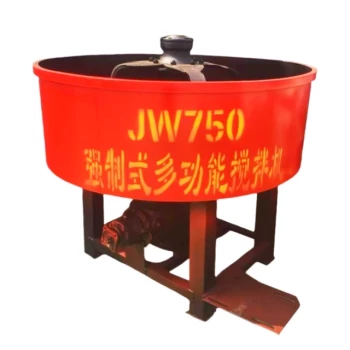
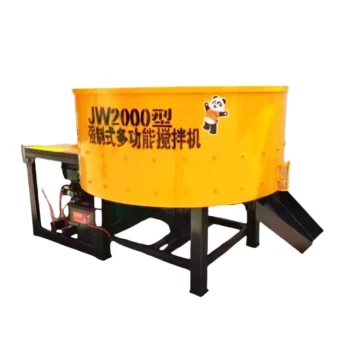
Yes, a mortar mixer is frequently used for both concrete and grout projects. Its primary function is to mechanically blend cement, aggregates (like sand and gravel), and water into a completely uniform and workable mixture, which is essential for achieving the required strength and durability for applications like foundations, walls, and structural repairs.
The critical distinction is not if a mortar mixer can be used for concrete and grout, but when it is the appropriate tool. Its design excels at blending finer, stickier materials like grout, but it can be less effective than a traditional drum mixer for concrete that contains large, coarse gravel.
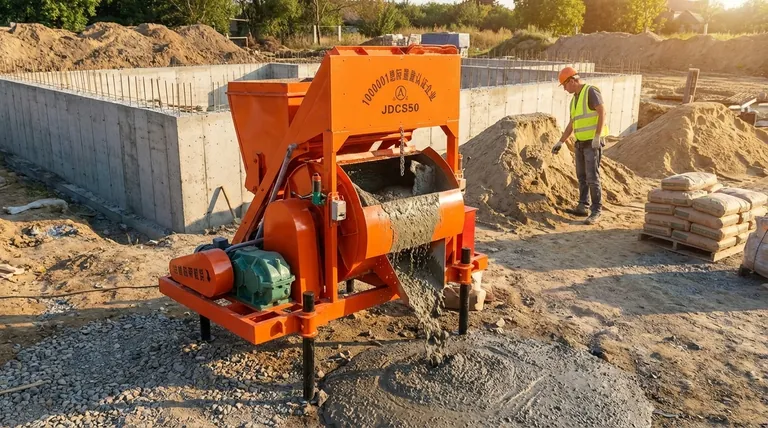
The Mixer's Role in Material Consistency
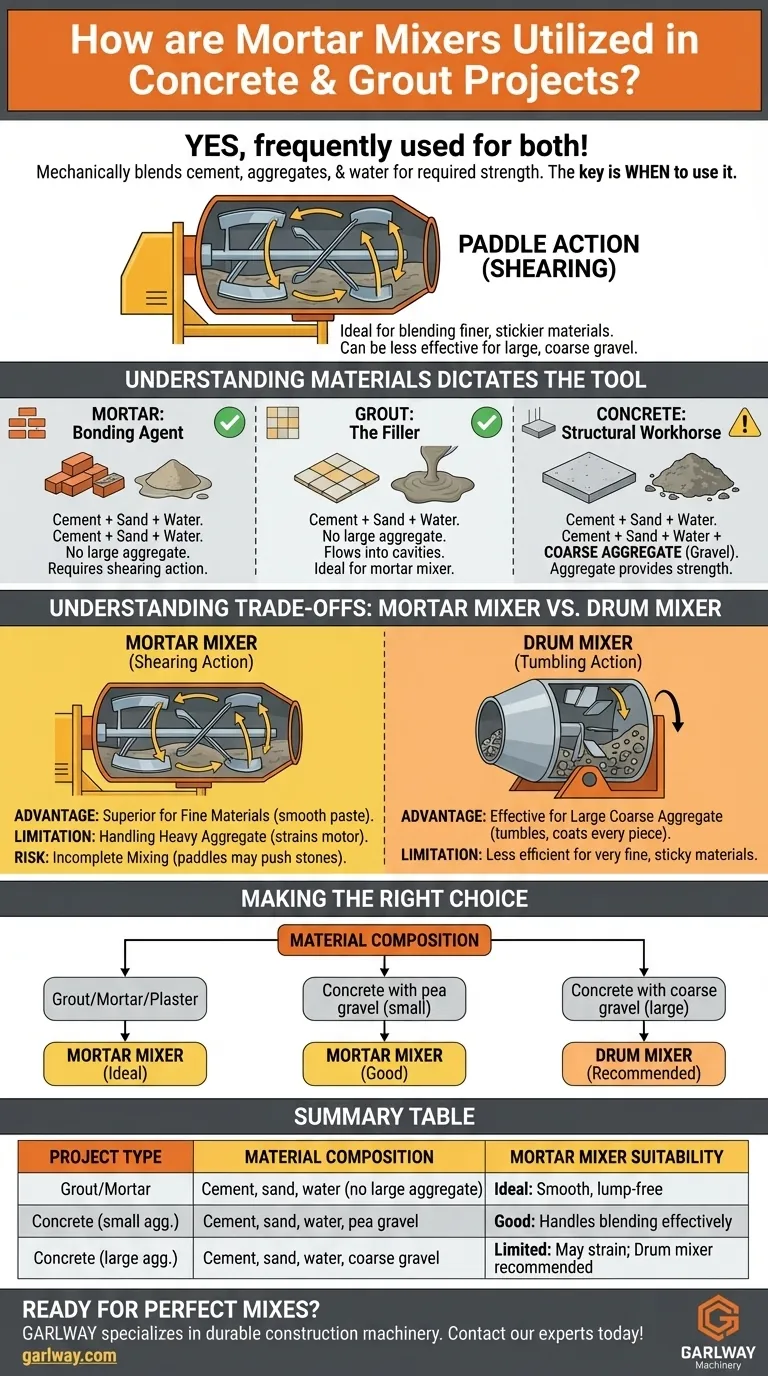
A mortar mixer, also known as a "paddle" or "trough" mixer, uses a stationary drum with rotating paddles inside. This design creates a shearing action that is highly effective at thoroughly combining ingredients.
Ideal for Grout and Flowable Mixes
Grout is typically composed of cement, sand, and water, resulting in a flowable mixture used to fill gaps or voids. The paddle action of a mortar mixer is perfectly suited for this, as it aggressively cuts through the paste to eliminate lumps and ensure a perfectly smooth, consistent liquid.
Capable for Specific Concrete Applications
For concrete, a mortar mixer combines cement, sand, water, and a coarse aggregate like gravel. The mixer's powerful paddles can handle this, especially when the aggregate is smaller, such as pea gravel. The result is a homogenous mixture ready for forming into slabs, footings, or walls.
Understanding the Materials Dictates the Tool
While the terms are sometimes used interchangeably, the composition of mortar, grout, and concrete is fundamentally different. This difference is key to understanding which mixer is best.
Mortar: The Bonding Agent
Mortar is a thick, paste-like material used to bind masonry units like bricks and stones together. It contains cement, sand, and often lime, but no large aggregate. Its sticky consistency requires the shearing action a paddle mixer provides.
Grout: The Filler
Grout is thinner than mortar and is designed to flow into and fill cavities, such as the space between tiles or inside concrete blocks. It also lacks large aggregate, making it an ideal material for a mortar mixer.
Concrete: The Structural Workhorse
Concrete is a composite material used for structural applications. Its key differentiator is the inclusion of coarse aggregate (gravel or crushed stone). This aggregate provides the bulk of its compressive strength.
Understanding the Trade-offs: Mortar Mixer vs. Drum Mixer
Choosing the wrong mixer for the job can lead to equipment strain and, more importantly, a poorly mixed product that compromises structural integrity.
The Advantage: Superior Mixing for Fine Materials
The forced shearing action of a mortar mixer's paddles is unmatched for creating a smooth, homogenous paste from materials without large stones. This is why it is the standard for mortar, plaster, and grout.
The Limitation: Handling Heavy Aggregate
The primary challenge for a mortar mixer is concrete with large, heavy aggregate. The stationary paddles must force their way through the heavy stone, which can strain the motor and drivetrain.
The Risk: Incomplete Mixing
With very coarse aggregate, the paddles may push the stones around rather than lifting and folding them into the mixture. A classic concrete drum mixer, which tumbles the material using gravity, is often more effective at coating every piece of large aggregate with cement paste.
Making the Right Choice for Your Project
Use the material's composition as your guide to select the proper equipment.
- If your primary focus is grout, mortar for masonry, or plaster: A mortar mixer is the ideal tool, designed specifically for the consistency of these materials.
- If your primary focus is concrete with no aggregate or small pea gravel: A mortar mixer is a highly effective and appropriate choice for the job.
- If your primary focus is structural concrete with large, coarse gravel: A rotating concrete drum mixer is the more reliable and suitable tool for ensuring a properly mixed, high-strength product.
Ultimately, matching the mixer's action to the size of your aggregate is the key to achieving professional and durable results.
Summary Table:
| Project Type | Material Composition | Mortar Mixer Suitability |
|---|---|---|
| Grout/Mortar | Cement, sand, water (no large aggregate) | Ideal: Ensures smooth, lump-free consistency |
| Concrete (small aggregate) | Cement, sand, water, pea gravel | Good: Handles blending effectively |
| Concrete (large aggregate) | Cement, sand, water, coarse gravel | Limited: May strain mixer; drum mixer recommended |
Ready to achieve perfect mixes for your construction projects? GARLWAY specializes in durable construction machinery, including mortar mixers, concrete mixers, and batching plants designed for contractors and construction companies worldwide. Let us help you select the right equipment for superior results—contact our experts today to discuss your needs!
ビジュアルガイド
関連製品
- JDY350 電動油圧モルタル泥コンクリートミキサー
- JDC350 小型セメントコンクリートモルタルミキサー
- 建設用ミニセメントモルタルミキサートラック
- Belle Mixer Drum Self Loading Mortar Mixers JS3000
- 販売用JS1000プラネタリーコンクリートモルタルミキサー スキッドステアセメントミキサー